Object Conservation
Highlight: Waistcoat, Young & Rochester, c. 1914

Waistcoat by Young & Rochester, c. 1914 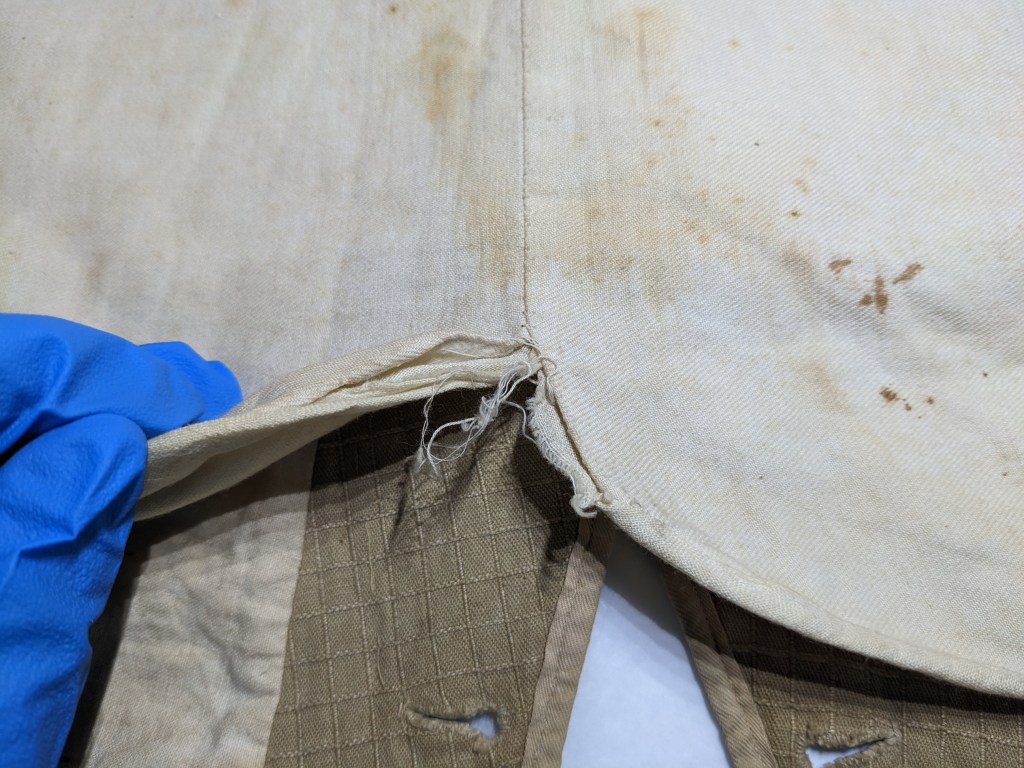
There is a significant tear on the reverse of the waistcoat. 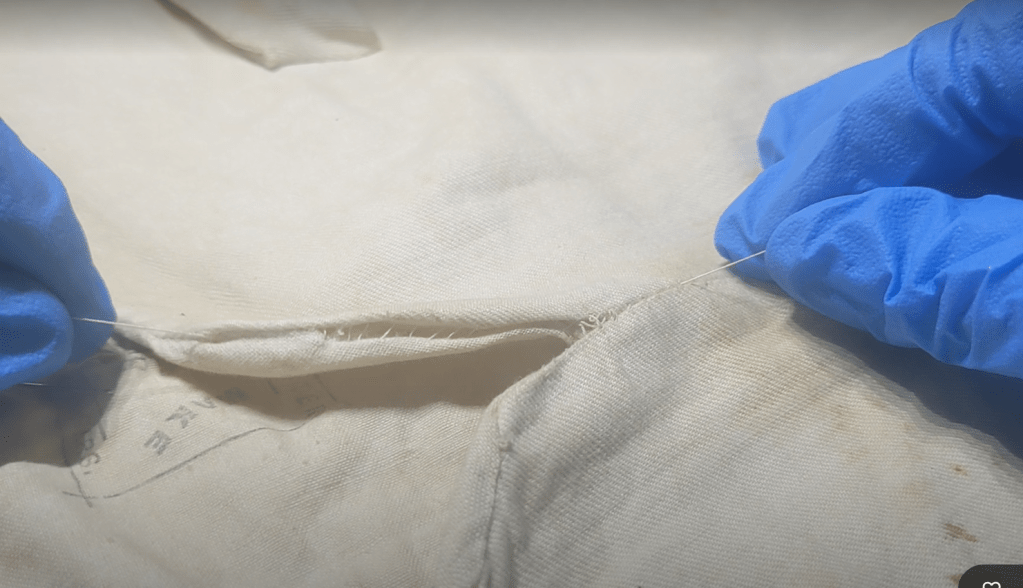
The tear has been repaired with natural cotton thread and a careful ladder stitch. Here, I am pulling the thread taut. 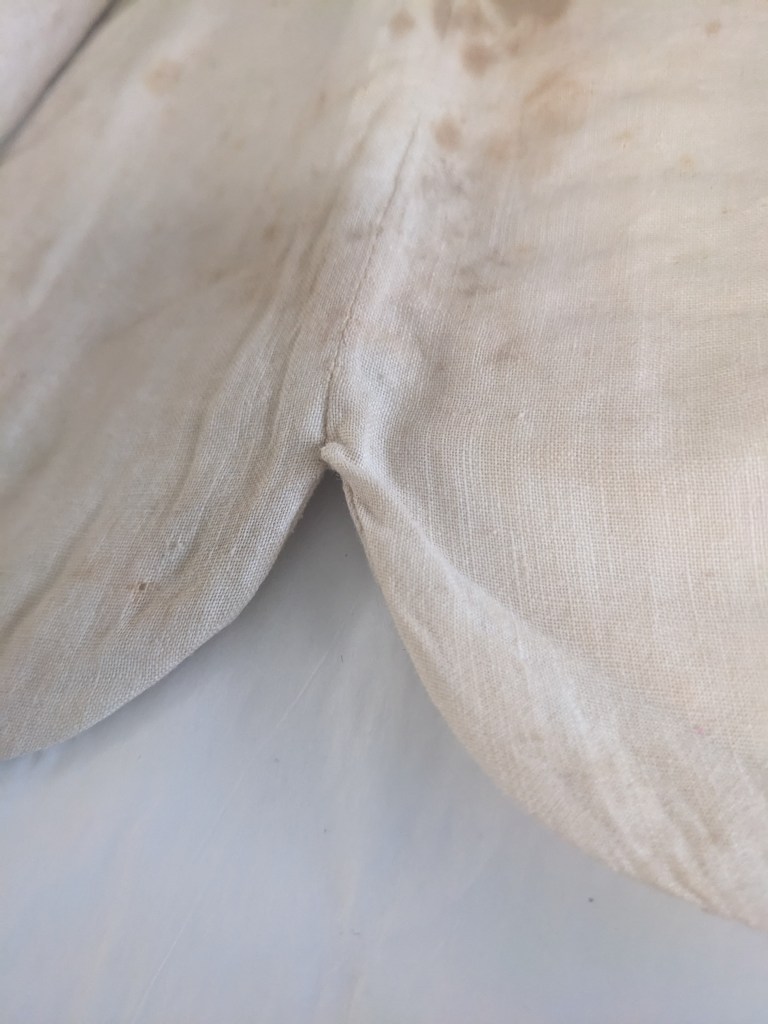
The same tear, after treatment. 
It sure is handy when the brand is right on the garment!
In the lab…

Map of Peterborough
Colour matching is a tricky business, as colour perception depends heavily on ambient light. In this map, I have shaded the paper infill (centre of image, originally a cream colour) with coloured pencils to match the surrounding colour of the map. To complete the look, the hatched line will be added in very thin pen or pencil.
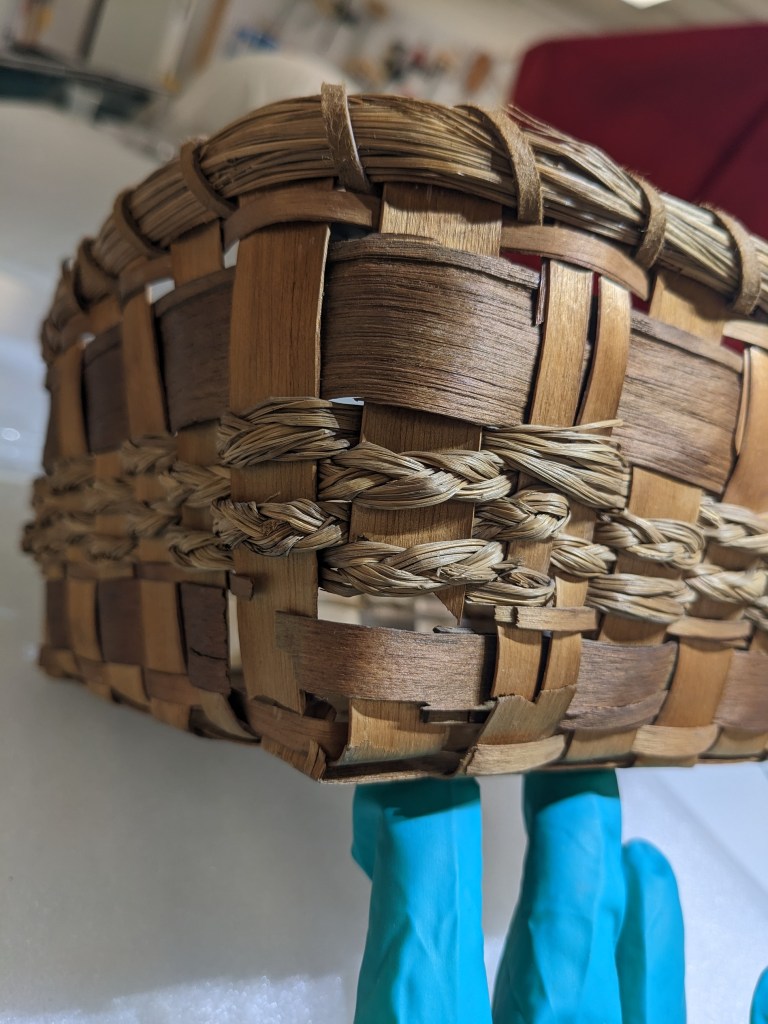
Basket
Every object needs careful observation and documentation. This complex woven basket has damage to the bottom corner that will need to be stabilized.
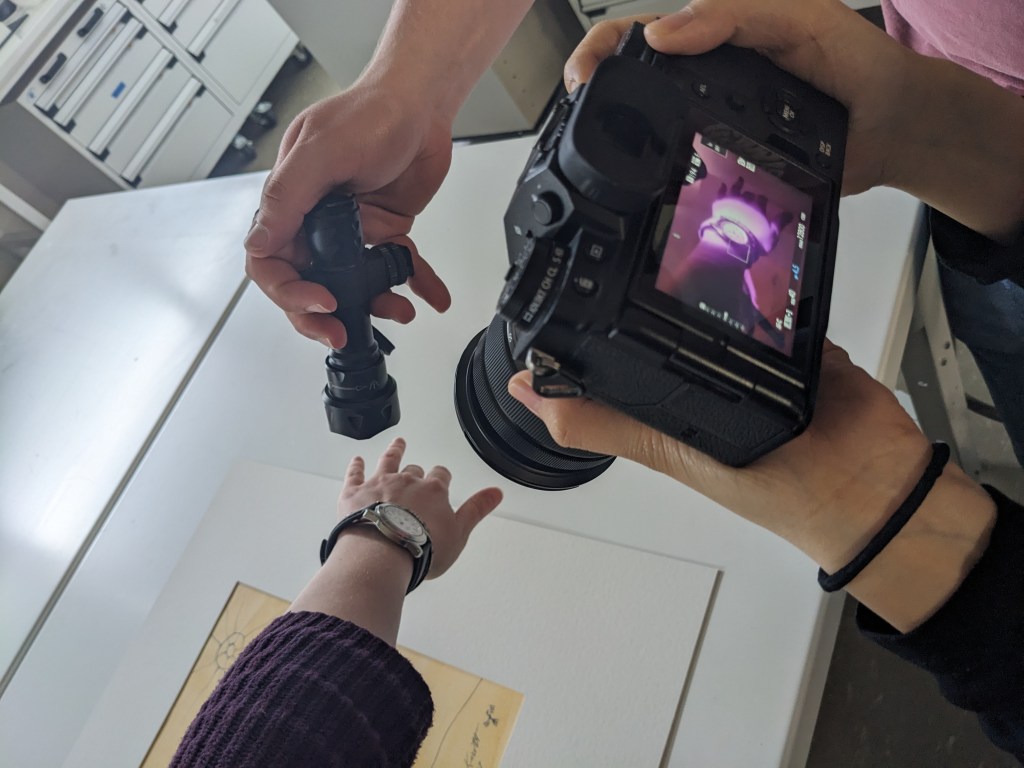
Infrared photography
Conservators will use every tool at their disposal to investigate an artifact’s condition. Here is an example of invisible infrared light made visible with an infrared camera (training and equipment courtesy of Fujifilm Canada Inc.).

Book Sleeve
Stabilizing an artifact is the priority. Here I am checking the straightness of the edges of the paper infills I have added to reinforce the bottom edge of this book sleeve.
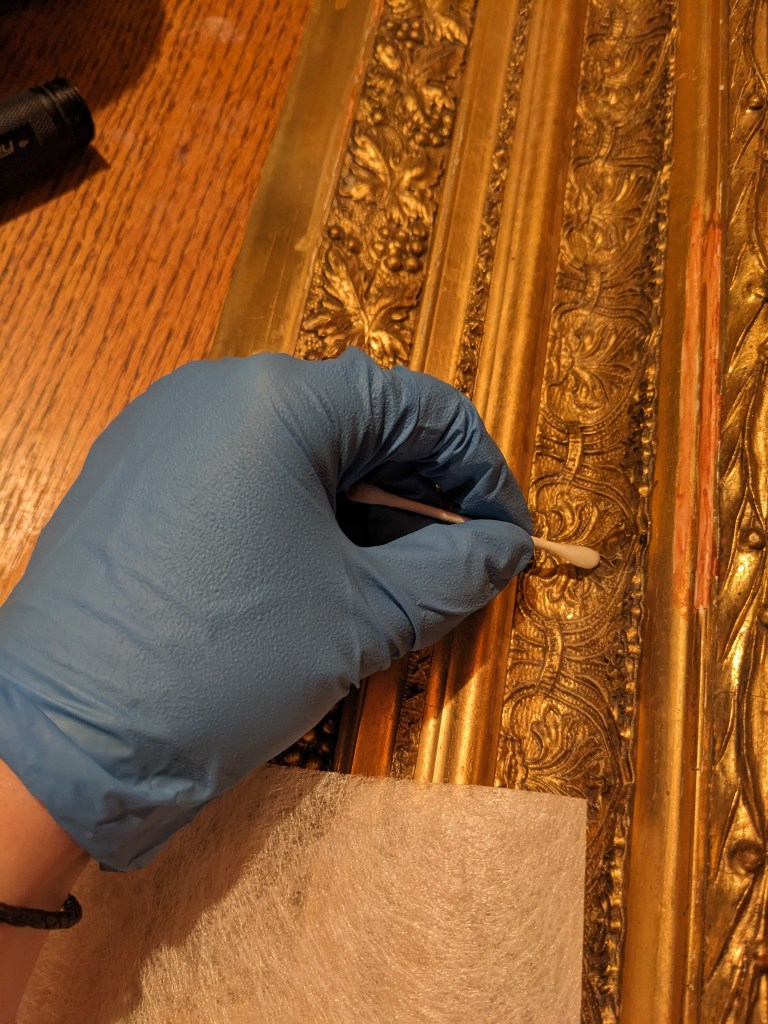
Picture frame made of gilded, plastered wood
Sometimes all it needs is a spit shine and a lot of patience. Enzymes in saliva are very effective at removing grime. The final polish shown here is a cotton swab dipped in deionized water.
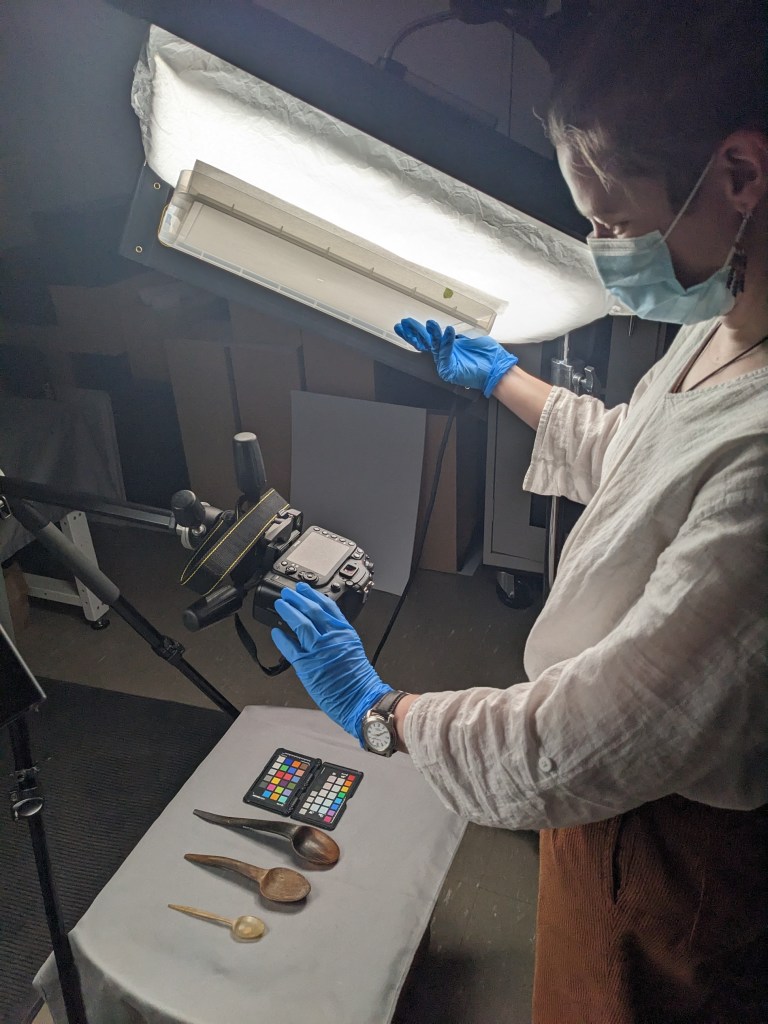
Document, document, document!
Artifacts are carefully assessed before, during and after treatment. Here I am taking “After Treatment” photos of three horn spoons. The plastic lid is diffusing the light to minimize the shiny glare on the smooth surface of the spoons.
In the field…

Archaeological Artifact Management
During an excavation, the priority is making sure artifacts are clean, dry, and identifiable. The lab can see thousands of artifacts in a season so good time and resource management is key! Here is a (very small) sample of bone and glass collected during the 2022 season of the Shickluna Shipyard excavation.
 Luise Wolf